
News 05.12.2025
Energy efficiency in Germany: Why progress is stalling – and how PAUL Tech is closing the crucial gap
Ralf Lanzrath
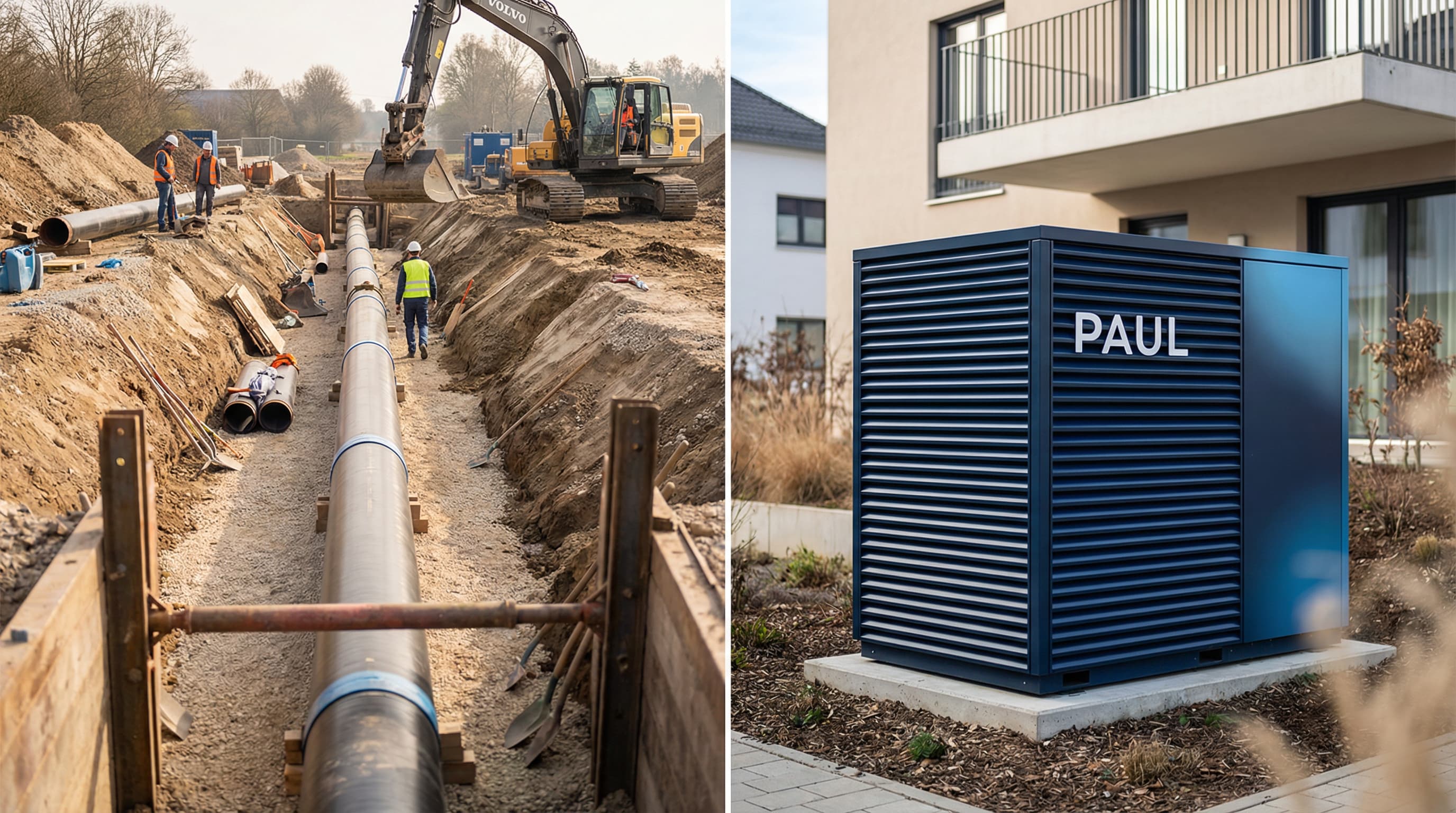
PAUL Tech: Real savings instead of statistical progress
While renewable energy sources appear more “efficient” on paper, PAUL Tech delivers results that are immediately noticeable: lower consumption, fewer emissions, and reduced costs – in real kilowatt hours.
Our technology platform combines:
- real-time digital analysis of energy flow
- AI-based optimization of the heating system
- demand-oriented control
- continuous monitoring and fault detection.
- The result: 10–30% energy savings in existing buildings, regardless of the heat generator.
Unlike infrastructure projects such as district heating expansion, which often take decades,
PAUL takes effect within a few weeks – without interfering with the building fabric and without high investment costs.
Why is this crucial right now?
The ZfK article clearly shows where the greatest leverage lies:
- The building sector is one of the most important drivers of efficiency.
- Progress is stagnating.
- Statistical improvements are no longer enough.
- The 2030 climate targets are at risk.
Digital efficiency improvements in existing buildings are the fastest and most effective lever for closing the gap. Our services deliver “real” efficiency – not statistically embellished. While renewable energies automatically look good on the balance sheet, PAUL delivers real, measurable reductions in consumption in the operation of heating systems:
- Digital hydraulic optimization
- Dynamic energy flow model
- Demand-based heating
- Algorithmic efficiency improvement in real time
- Monitoring, fault prediction, and AI-based control
This is physical final energy savings, not statistical primary energy trickery.
Progress is real—but far too slow
The latest analysis by AG Energiebilanzen shows that Germany's energy efficiency has improved significantly since 1991 – by an impressive 51 percent. But progress is slowing down. Statistics even show a slight downward trend for 2024, when weather conditions and inventories are factored out. The signs of slowing progress are clearly visible.
Particularly relevant for the real estate industry: although the energy consumption for heating residential buildings has fallen by 28 percent since 1991, efficiency gains are increasingly stagnating. A lack of skilled workers, outdated systems, increasing complexity, and a shortage of operating data mean that the building sector is not coming close to exploiting what is technically possible.
At the same time, statistical peculiarities in energy accounting mean that renewable energies make the efficiency trend look better than it actually is: electricity from wind and photovoltaics is assumed to have 100% efficiency. This improves the primary energy indicators – without reducing actual consumption in buildings.